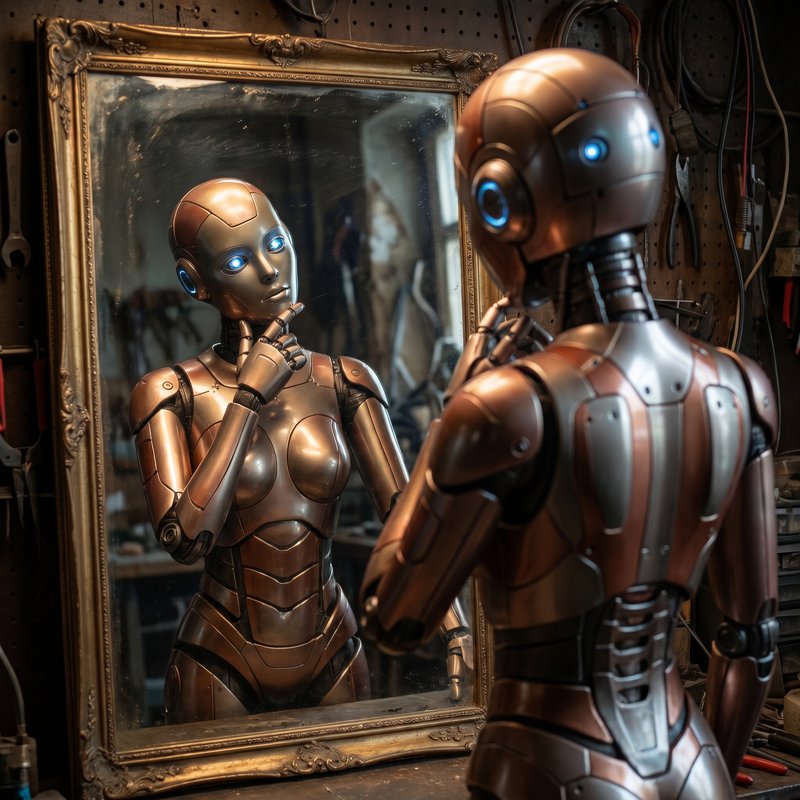
The Supreme Court denied cert in Thaler v. Perlmutter on March 2, leaving in place the DC Circuit’s holding that the Copyright Office may refuse to register a work whose sole listed author is a machine. That’s it. That’s the holding.
The case is narrower than the headlines suggest. Stephen Thaler’s “Creativity Machine” produced a static image titled “A Recent Entrance to Paradise.” Thaler listed the machine as sole author and — critically — repeatedly waived any claim to his own authorship of the work, the prompts, or the training process. He wanted to litigate the question of pure machine authorship, and he got an answer to that question. He did not get an answer to any other question.
That matters because the questions that actually affect working developers are all the other ones. What about a patch you wrote with Copilot looking over your shoulder? What about a function you generated wholesale and then edited? What about an LLM-mediated rewrite of a copyleft library — is the output a derivative work or a clean-room reimplementation? Thaler says nothing about any of this, and the Copyright Office’s own guidance on human-directed AI assistance has been notably more permissive than the headlines suggest.
The risk is not the holding. The risk is the citation. Lower courts and Copyright Office examiners will be tempted to extend Thaler well beyond a static AI-only image into LLM-assisted code, and the resulting precedent could be a mess for anyone who has ever accepted an autocomplete suggestion. There is no good reason to expect that to happen on the merits. There is every reason to expect it to be argued.
Aaron Moss at Copyright Lately has the best short read on what Thaler actually decided and which questions are still live. Worth your time:
Thaler Is Dead. Now for the AI Copyright Questions That Actually Matter.